These storied halls
History
The heritage of
Gilford Castle
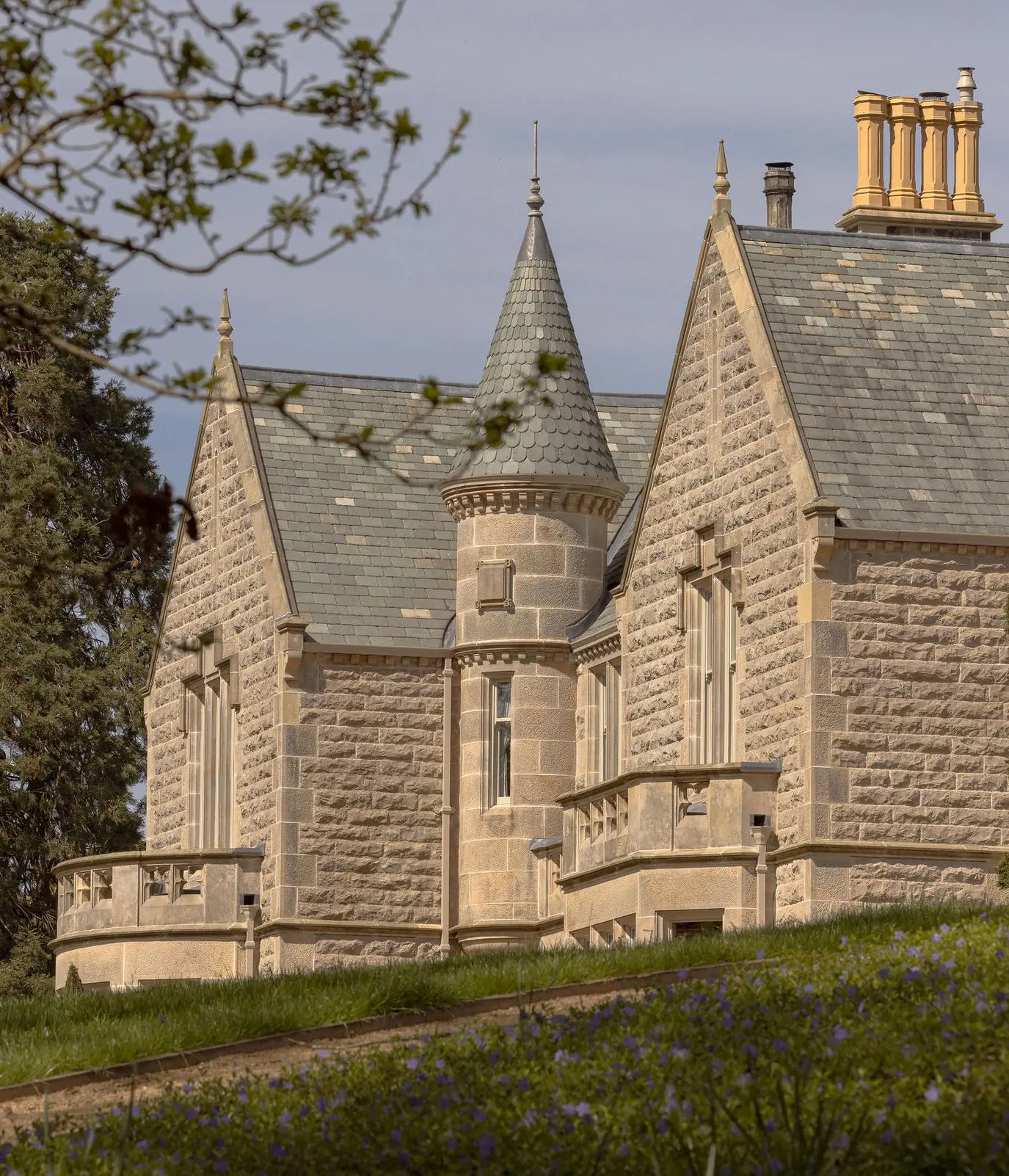
Gilford Castle is a testament to Victorian elegance and architectural grandeur. It bears the marks of its many inhabitants, from the Dickson family, who commissioned its construction, to the Wrights, who lovingly restored and expanded it, infusing it with their unique character.
This estate embodies living history. It has witnessed generations pass, each leaving its mark, from its opulent beginnings to its present-day tranquillity. While that past lingers in its walls, Gilford Castle welcomes a new chapter as a place where tradition and modernity meet.
Discover how this bend in the River Bann came to be home to one of County Down’s most illustrious homes.
“Our parochial history is but Irish history, acted on a smaller stage.”
– E.A Myles, Historical Notes on the Parish of Tullylish, 1937

History
By the banks of the Bann


Deep time
A river runs through it
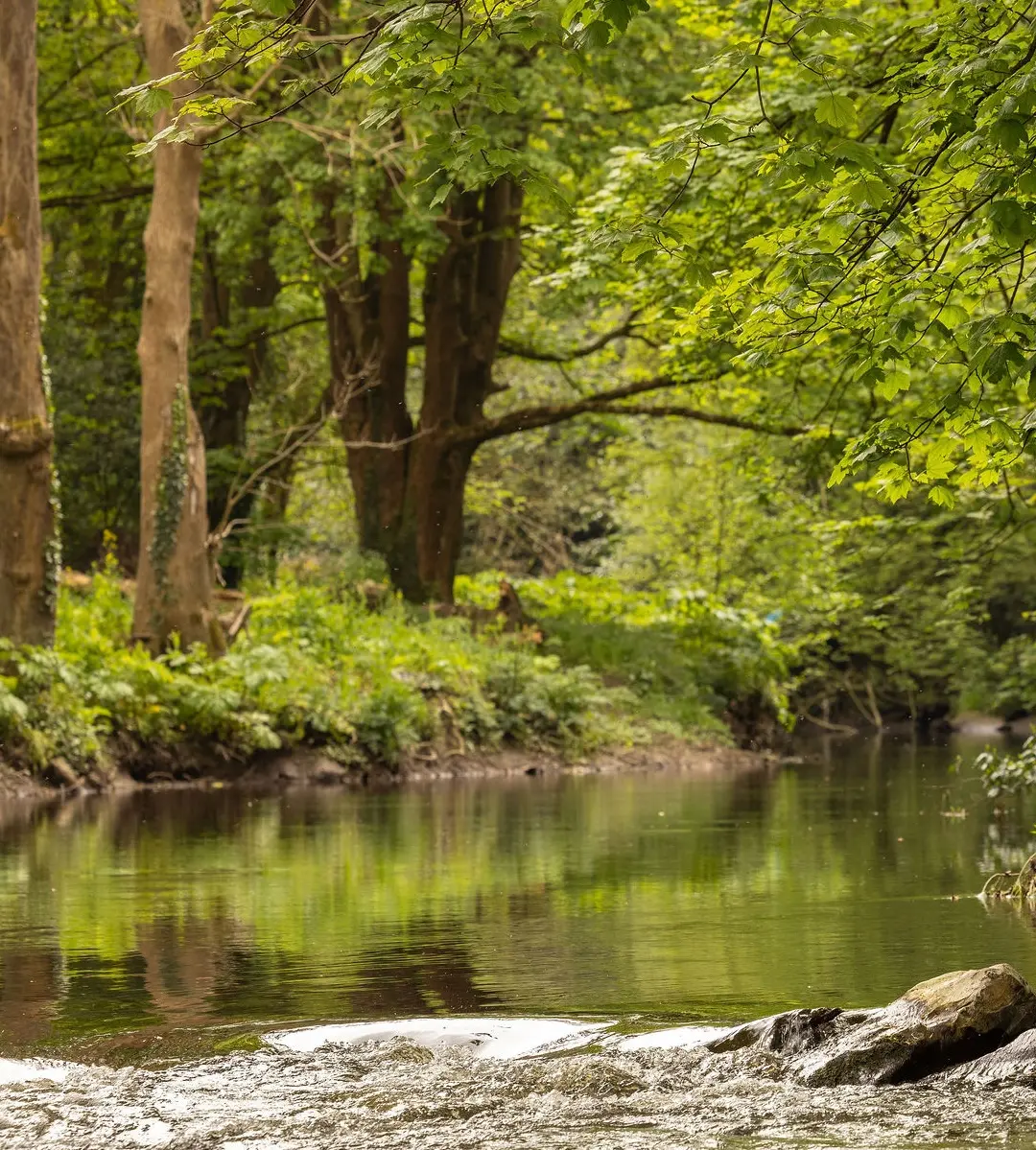
Gilford Castle sits near a strategic ford on a bend in the River Bann, formed as melting glaciers carved the landscape at the end of the last Ice Age.
Mesolithic people—Ireland’s first human inhabitants—doubtless crossed here as they roamed the oak, ash, and birch forests south of Lough Neagh. People have been crossing here ever since. For most of history, the river was a natural highway through this rolling, thickly wooded landscape. Later, with the arrival of farming, this bend would have been a favourable location for early agriculturalists. A standing stone from this deep past once stood on the hillside east across the river from Gilford Castle. It was removed to make way for a rail line in the 19th century.
◂ The River Bann bends through Gilford Castle Estate on its way to the local village, Portadown, and Lough Neagh beyond.
Early Middle Ages
In the land of Iveagh
This bend in the River Bann was at the heart of Iveagh, an ancient territory that emerged out of myth and into history in the 7th century.
Throughout the early Middle Ages, Iveagh was ruled by the Dál Fiatach clan from their stronghold at Downpatrick, their territory stretching from the Mourne Mountains to the shores of Lough Neagh. This powerful dynasty was frequently recognised as kings of Ulster amid the shifting politics of the era, maintaining their dominance in a landscape of rival clans. The arrival of the Norman English in the 12th century disrupted these power dynamics, and as authority splintered and reformed, the Magennis clan rose to prominence in Iveagh. They secured their rule through strategic fortresses and deft management of the alliances and conflicts among the other Gaelic lords and the Anglo-Normans.
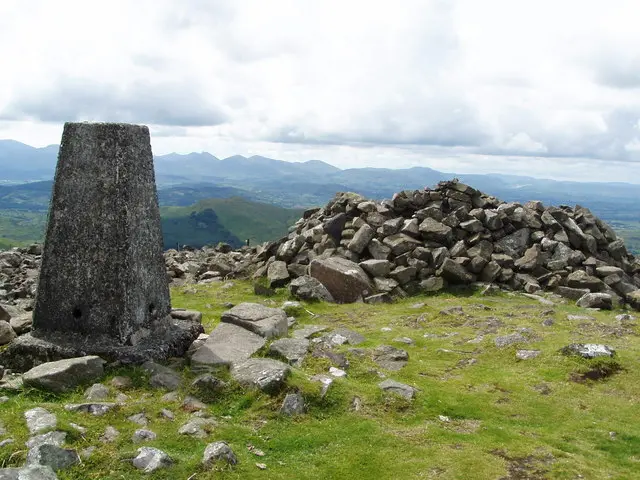
◂ The summit of Slieve Croob, in the ancient territory of Iveagh, 40 mins from Gilford Castle. Henry Clark. CC BY-SA 2.0.
Late Middle Ages
The ridge of the fern
The rise on which Gilford Castle now stands may have acquired its townland name during the late Middle Ages—Drumaran (Druim Arán), meaning “the ridge of the fern.”
For much of early history, the land around present-day Gilford remained largely unchanged—the rolling downs carved out by the last Ice Age, cloaked in ancient forests. Raths—farmsteads defended by circular, earthen walls—stood in hilltop clearings. Tullylish Parish, which incorporates Gilford, derives its name from Tulaigh Lis, the hill of the fort. However, the medieval period brought dramatic changes to the landscape. As the power of Gaelic clans solidified, waves of land clearance swept Ireland, transforming Iveagh from dense woodland to a patchwork of fields and pastures. This shift accelerated during the 17th century with the Plantation of Ulster, paving the way for new settlements and estates.
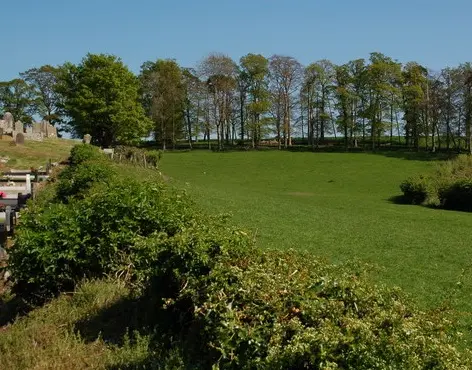
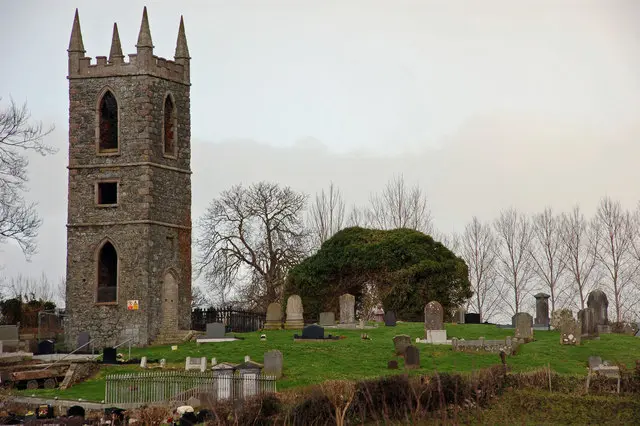
◂ The trees of Tullylish Rath, a short walk from Gilford Castle, conceal a 6th-10th century monastery, later partly reused as the parish churchyard. Albert Bridge. CC BY-SA 2.0.
1641
The rebellion
The roots of modern Irish history lie in the Nine Years’ War which precipitated the self-imposed exile of the northern Gaelic lords, known as the “Flight of the Earls” in 1607.
Their departure left behind a power vacuum that the English Crown was quick to exploit by launching the Plantation of Ulster. This sweeping colonisation effort saw land confiscated from the Gaelic Irish and granted to English and Scottish settlers. It transformed Ireland’s natural, political, and social landscapes. Vast estates were carved out, new towns established, and resentment grew among the dispossessed Gaelic Irish and Old English. This discontent erupted into rebellion in 1641, an uprising aimed at reclaiming lands lost to the Plantation, and for a time, it seemed the rebels might restore the old order.
◂ Tullylish Old Church, a short walk from Gilford Castle, was razed in 1641, but rebuilt in 1698. Albert Bridge. CC BY-SA 2.0.
1649-1700
A new order
The rebellion escalated into a brutal and chaotic conflict, becoming intertwined with the English Civil War. This region’s ancient Gaelic names—such as Tullylish and Drumaran—were augmented with new ones that reflected the century’s upheaval.
Oliver Cromwell brought his New Model Army to Dublin in 1649. His forces swept Ireland in a series of decisive, often bloody victories that extinguished the uprising. The Magennis strongholds fell, and the head of the clan—Arthur Magennis, an Irish Catholic royalist—ended his days petitioning the restored monarch, Charles II, for the return of his estates. Those lands had long since been divided among Cromwell’s lieutenants and financiers, including one Captain John Magill.
A Scottish settler and beneficiary of the Plantation, he had acquired lands from the Magennis clan. He parlayed his service in Cromwell’s army into a vast extension of his holdings, acquiring this bend of the River Bann in the process. The bend, in turn, acquired “Magill’s Ford” as a new name. John Magill established himself eight miles northeast at Gill Hall, just outside of Dromore. In 1676, he bequeathed all his estates in County Down to his grandson, John Johnston, marking the beginning of the Johnston family’s influence in the region.
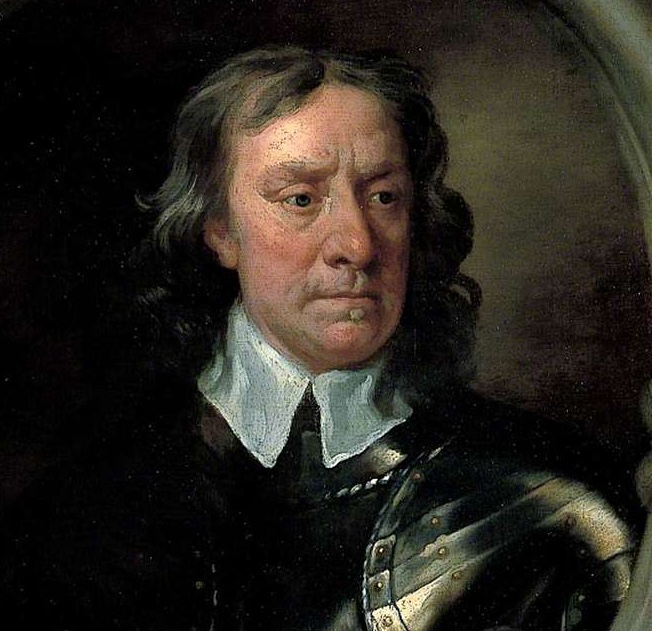
◂ Peter Lely’s portrait of Oliver Cromwell (1653–1654), now held at Birmingham Musuem.
18th century
The Johnstons’ rise
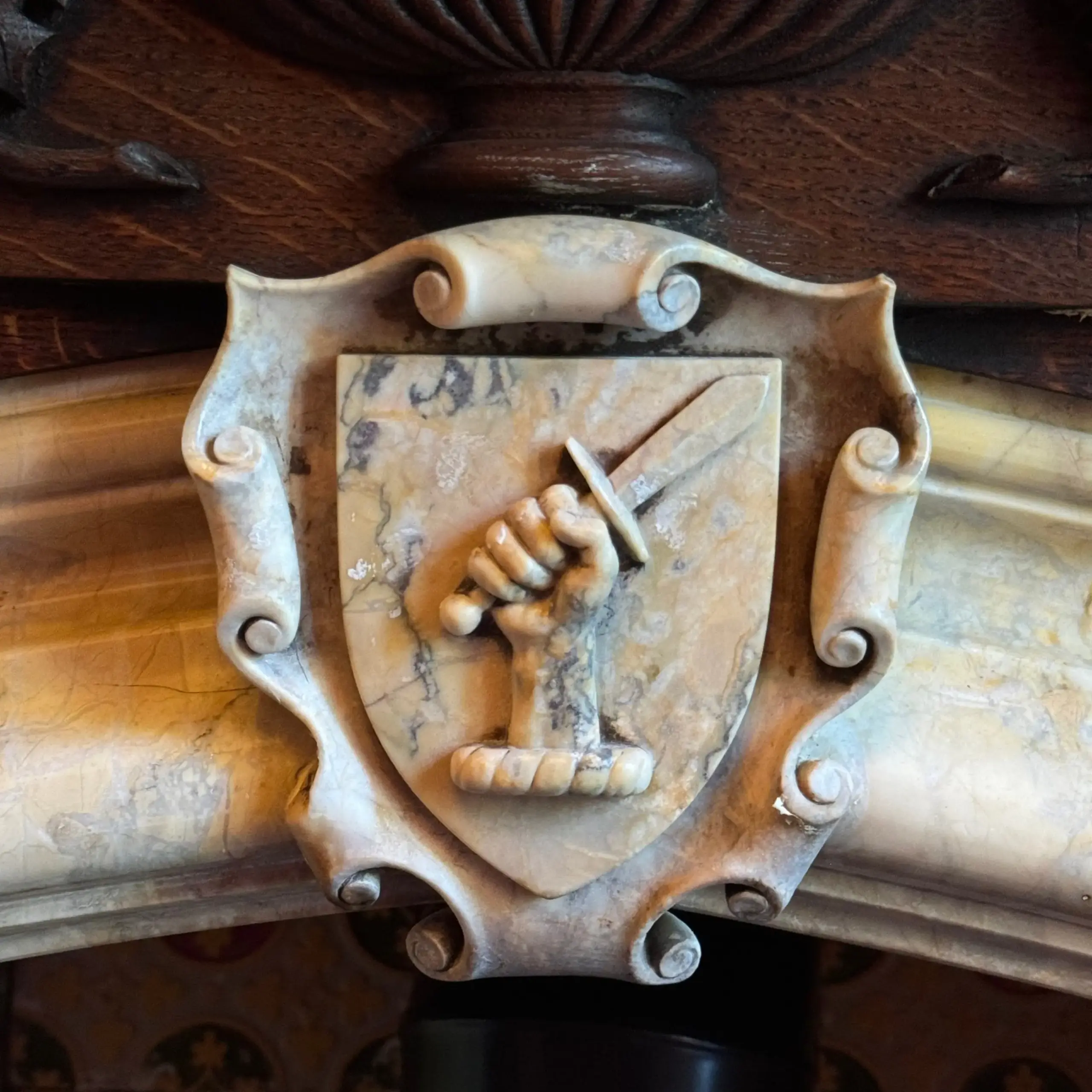
John Johnston assumed his grandfather’s name and coat of arms, and in 1680, he was elevated to a knighthood and baronetcy. His rise reflected dynastic ambition amid the Williamite Wars, when James II fought William of Orange for the crown. After William’s victory, Sir John Magill, as he was now known, sat in the Irish parliament for Hillsborough and Downpatrick. Childless at his death in 1701, his estates passed to his nephew Sir William Johnston, who expanded Gilford as an agricultural centre and built the first “Gilford Castle.” His son, Richard, carried the family legacy into politics and commerce, bearing the motto “Nunquam non paratus”—“Never unprepared.”
As High Sheriff of County Down in 1735, Richard developed the estate and tied its fortunes to the growing linen industry. The castle, surrounded by admired gardens and lawns, reflected the family’s wealth, though only fragments survive. He recognised the River Bann’s value for whitening linen and powering mills, opportunities his son Sir Richard Johnston would seize. Yet unrest followed. In 1772, after Sir Richard arrested tenant leaders from the “Hearts of Steel” movement—fuelled by poor harvests, rising rents, and punitive fines—2,000 Steelboys stormed Gilford Castle, ransacked its interior, and left it in ruins. Sir Richard and his men escaped by swimming the Bann under fire, before rallying reinforcements and capturing the ringleaders.
Despite this upheaval, Sir Richard was made the 1st Baronet of Gilford and granted a pension by parliament. He invested in flax processing, creating bleaching greens and mills that placed Gilford at the heart of the linen economy, while serving as MP between 1776 and 1795. On his death, his son William inherited the lands and titles, beginning the longest—and the last—tenure of the Gilford Johnstons.
◂ The Johnston coat of arms still graces the heraldic cartouche on the fireplace in Gilford Castle’s library.
19th century
From gentry to industry
In the early 1800s, Gilford remained a rural village tied to the fortunes of linen and its curiously retiring landlord. While the Hawkins-Magills cultivated aristocratic status—Theodosia Hawkins-Magill marrying the Earl of Clanwilliam—Sir William Johnston, 2nd Baronet of Gilford, lived quietly, serving briefly as High Sheriff in 1788 before dying unmarried in London in 1841. Under his stewardship, the village evolved into a hub for flax processing and water-powered mills, attracting workers from the countryside even as emigration to the Americas intensified.
Sir William’s death ended the Johnston baronetcy, and with no heirs, the estate passed through distant relative Catherine Johnston, who sold it to industrialist Benjamin Dickson in the 1860s. The sale reflected a broader shift—the decline of rural aristocratic estates and the rise of industrial entrepreneurs. The railway had arrived in 1852, toppling the ancient standing stone that watched over the Bann and stitching Gilford into the global economy. In 1864, Dickson built a new Gilford Castle in the Scottish Baronial style, designed by William Spence, as a symbol of the village’s success in an industrial age. His leadership also saw the completion of a steam-powered mill in 1866, cementing Gilford’s position in the linen trade. At its height, Gilford’s mill employed over 15,000 workers.
Disputes marked Dickson’s career—his partnership with John McMaster dissolved in 1866 and ended in an acrimonious case before the House of Lords. Perhaps for this reason, he never lived in Gilford Castle, leasing it instead to various tenants, including his uncle, Percy Jocelyn McMaster, from 1887 to 1891. Meanwhile, Dickson became a founding partner of the firm that evolved into Thomas Ferguson & Co of Banbridge, today the last of Ireland’s linen Jacquard weavers. As the linen industry flourished, so did Gilford, with its mills at full capacity, linen reaching global markets, and new housing, schools, and a hospital built for a growing workforce. This new, industrial identity would define it long after the looms fell silent.
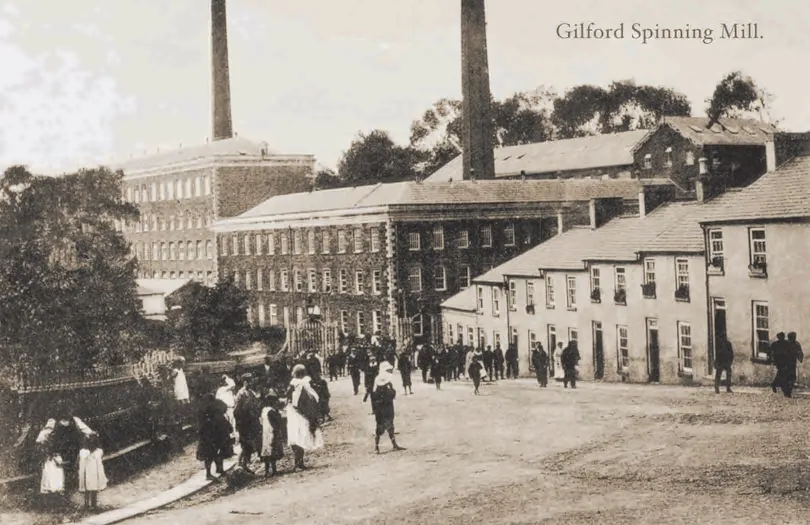
◂ A photograph of Gilford Mill around 1900.
Early 20th century
The Carleton revival
For many years, Gilford Castle was inhabited by only its staff. The 1902 census counts its occupants as the caretaker, his wife, and six children. But in 1904, Katherine Carleton purchased the remainder of the Gilford Castle estate from the estate of Benjamin Dickson. The transaction, formally registered in 1902, saw her acquire lands she and her cousins had already partially inherited, paying only the value of the land itself.
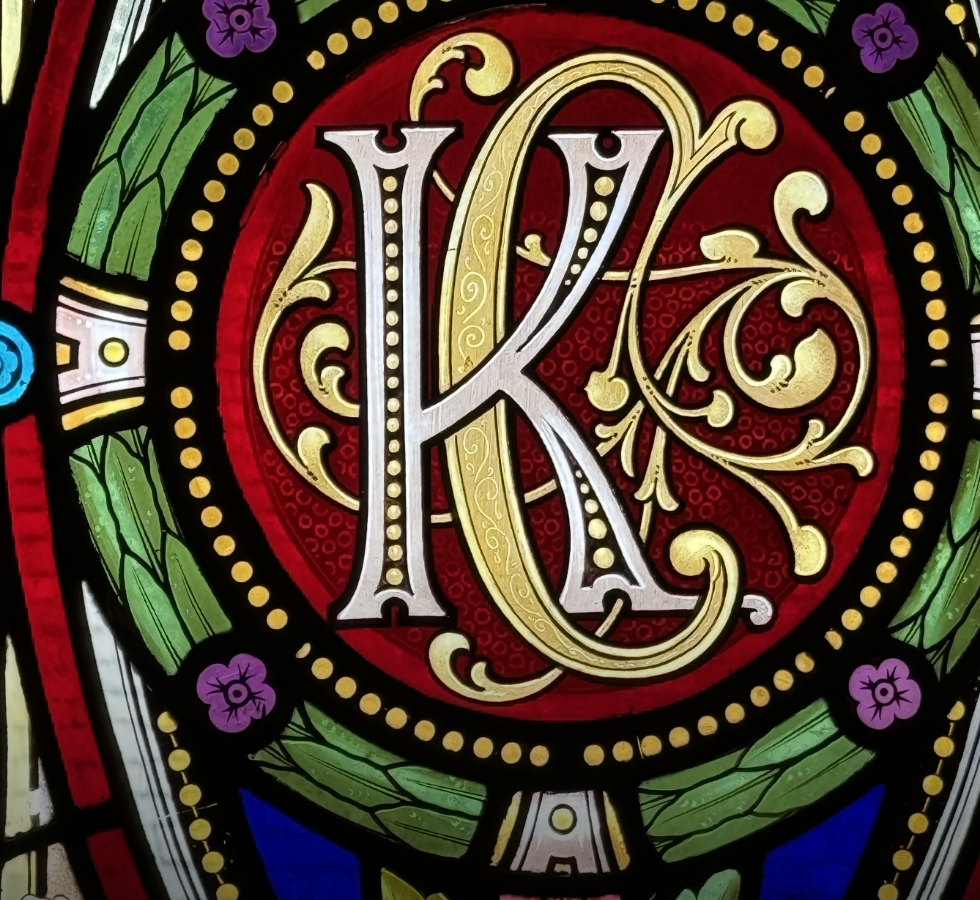
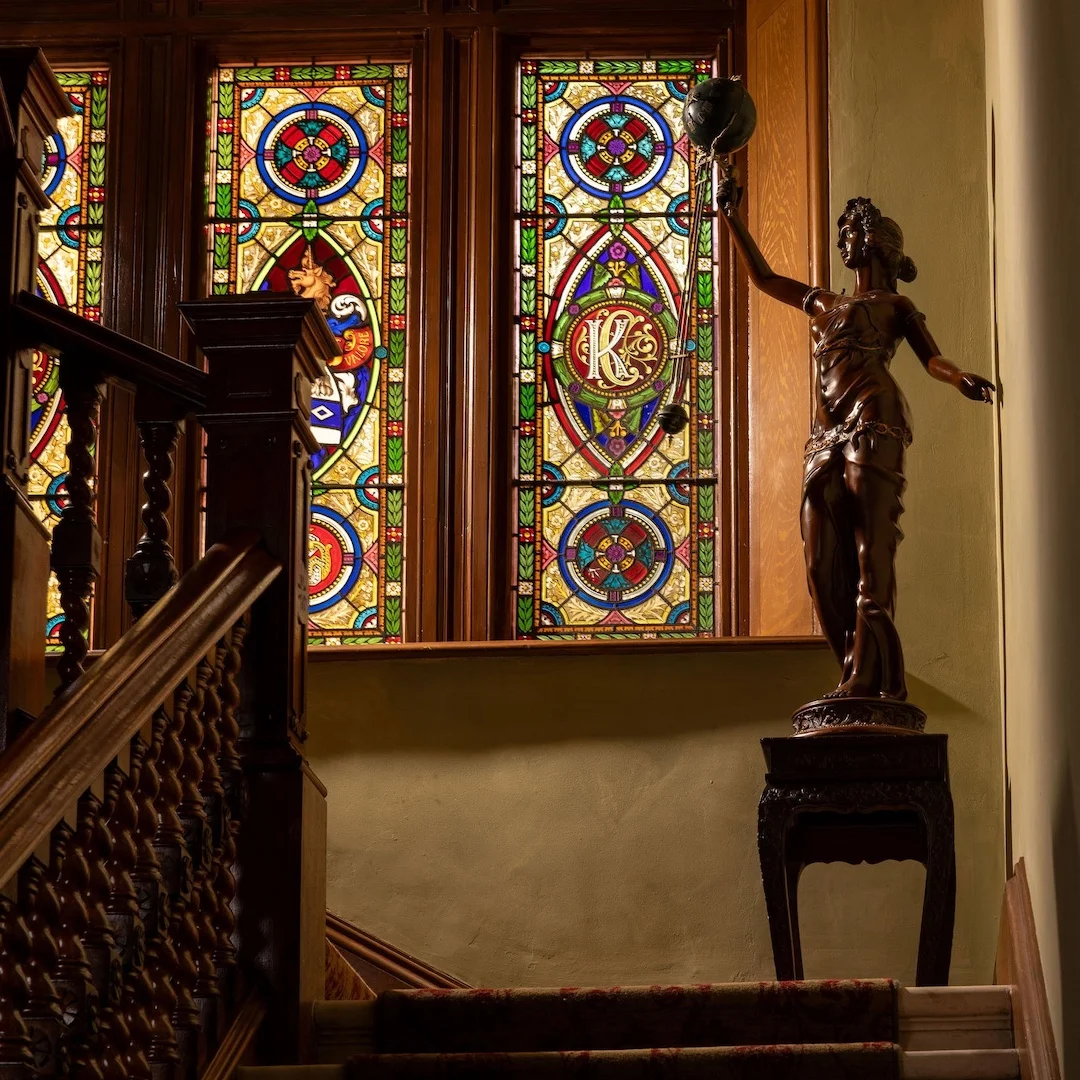
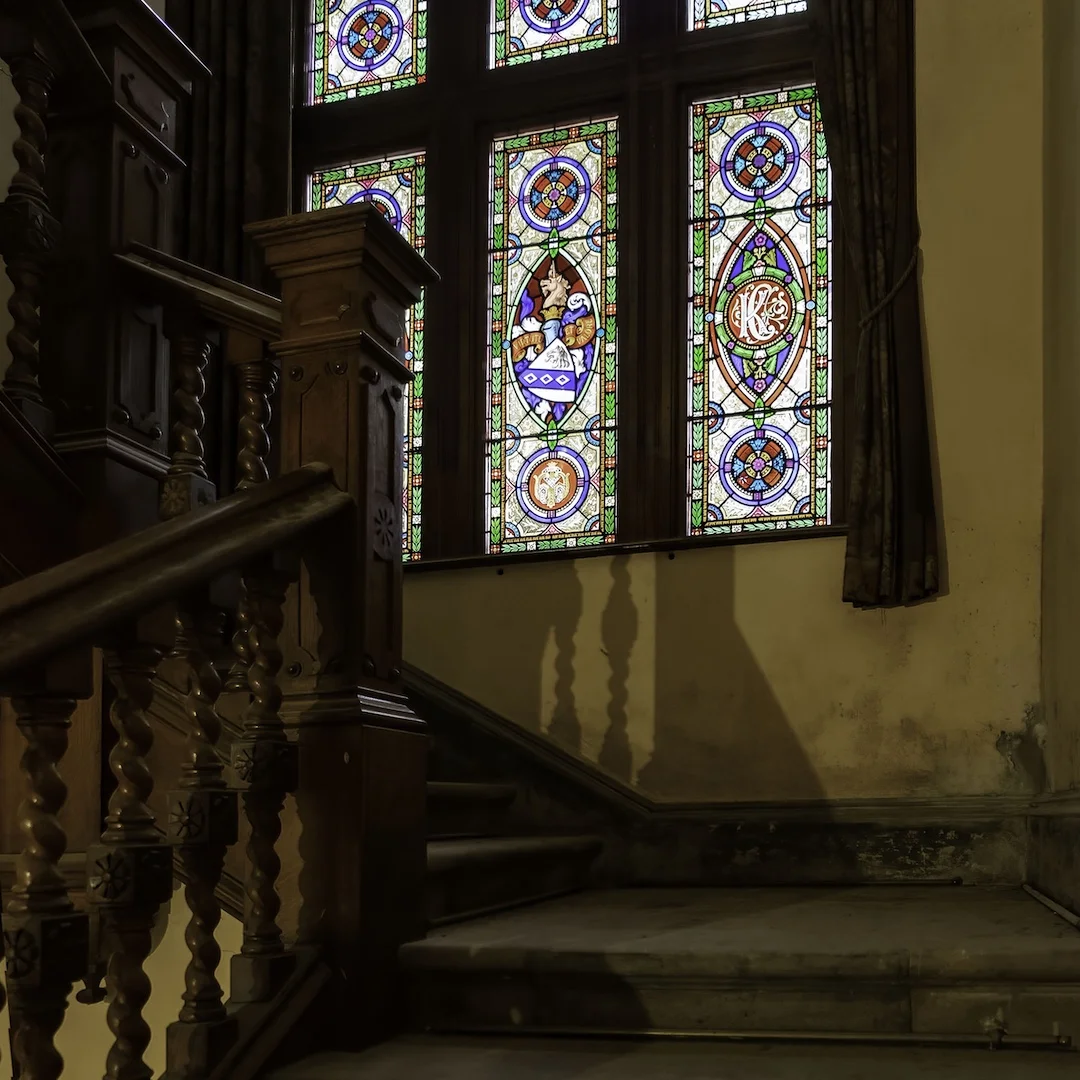
Katherine, an unmarried 54-year-old, became the castle’s first long-term resident, where she lived with a female companion, a cook, and a parlour maid. She was an auctioneer by profession and renowned for breeding prize cattle. Today, her portrait hangs in the Armagh Museum. She is an enigmatic figure who nonetheless left a distinctive mark on Gilford Castle—not least in the leadlighting emblazoned with “KC” that adorns the main staircase.
It is unclear when Katherine passed away, but the estate was sold sometime in 1914. Her ownership coincided with the first hints of linen’s decline as cotton became more competitive and the first synthetic fibres entered the market. Big houses were going out of fashion. Gilford Castle was no longer a symbol of industrial prosperity but a private estate and residence.
◂ Katherine Carleton’s initials commemorate her tenure in the main staircase’s leadlight window.
1914–2019
The Wright family at Gilford Castle
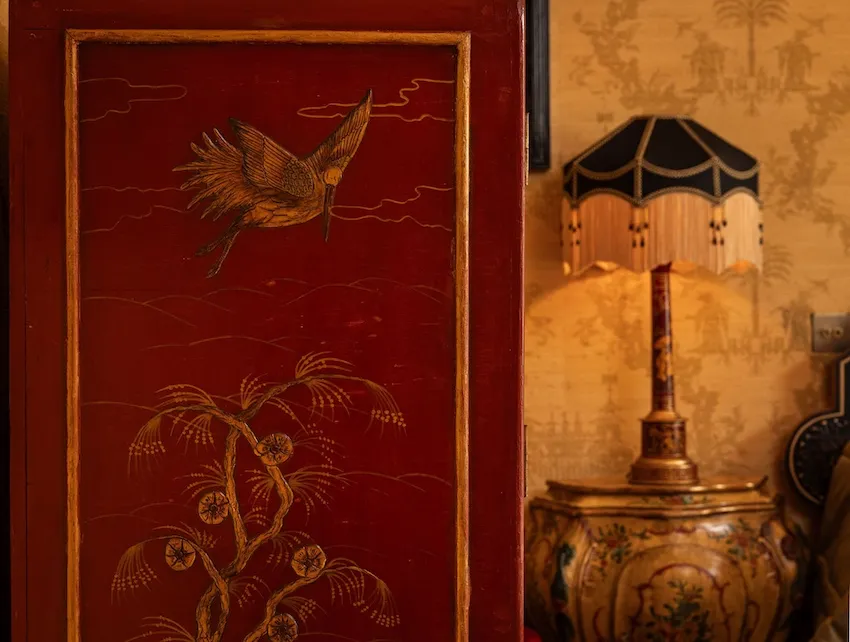
James Francis Wright, a merchant and stockbroker in Hong Kong and Manila, bought Gilford Castle in 1914. Married to Mary Menary, niece of Sir Thomas Jackson of HSBC, he brought home curios and furnishings from abroad, giving the house new layers of character. Unlike earlier owners, the Wrights made it their family home, and their descendants would live here for more than a century. James had fought in the Boer War, made a fortune in global finance, and lived through Ireland’s War of Independence, but seemed to yearn for tranquillity—his death certificate listed him simply as a farmer.
His son James and his wife Doris settled at Gilford in the 1930s. Doris, elegant and exacting, presided over the household for decades. During the Second World War, the castle was requisitioned by the British, American, and Belgian armies, while their son Michael served in the RAF. James died in 1954, leaving Doris in charge of the estate until the 1980s.
Michael, genial but drifting, found purpose with his second wife, Christine Johnson, an Englishwoman of irrepressible creativity. While Doris lived, Christine’s influence was checked, but after her death, the castle became a hub of art, hospitality, and eccentric reinvention. Michael grumbled at the stream of guests but rarely intervened. The couple raised four children, now scattered across Ireland.
Michael died in 1995, and Christine became the castle’s guardian for more than 25 years. She welcomed artists, friends, and strangers alike, filling the house with projects and conversation. Local historian Robert Logan called it “a house that never stopped.” Even as other estates declined, Christine kept Gilford alive with energy and imagination until she sold it in 2019. She passed away in 2022, leaving behind a legacy that is woven into the fabric of the castle itself.
◂ Selected pieces throughout the castle recall the Wright family’s connections to the Far East.

2019-present
The Moffett Family
In 2019, Gilford Castle began a new life under the care of Robert and Adrienne Moffett (née Meegan). The Moffetts’ motto, Spero Meliora—“I hope for better things”—is fitting for a family whose story blends invention, perseverance, and renewal.
The Moffetts have become known worldwide for their ingenuity. In the 1940s, Cecil Moffeett began designing tractor implements in a farm workshop in Clontibret, Co. Monaghan. After his untimely passing, his children carried on the work, and Robert later created the revolutionary Moffett Mounty. This truck-mounted forklift transformed their business and continues to sell worldwide today. Robert would go on to co-found Combilift, now one of Ireland’s leading manufacturers.
The restoration of Gilford Castle was a shared endeavour between Robert and Adrienne. Adrienne, a former auctioneer, valuer, and estate agent from Monaghan, oversaw the day-to-day site management with the expert support of her extended Meegan family—builders from Broomfield.
Robert guided the mechanical and electrical aspects, with a particular focus on achieving the highest possible energy efficiency for a house of this scale and age. Working together, and with Adrienne shaping the interior design throughout, they combined respect for the castle’s history with warmth, practicality, and detail drawn from a lifetime in property.
Today, Robert and Adrienne have reimagined Gilford Castle as both a home and a heritage project—uniting craftsmanship, enterprise, and hope for better things to come. Their three sons and two grandchildren will succeed them.
◂ The Moffett family crest Celtus, CC BY-SA 3.0, via Wikimedia Commons
Snapshots in time
Gilford Castle Estate’s transformation
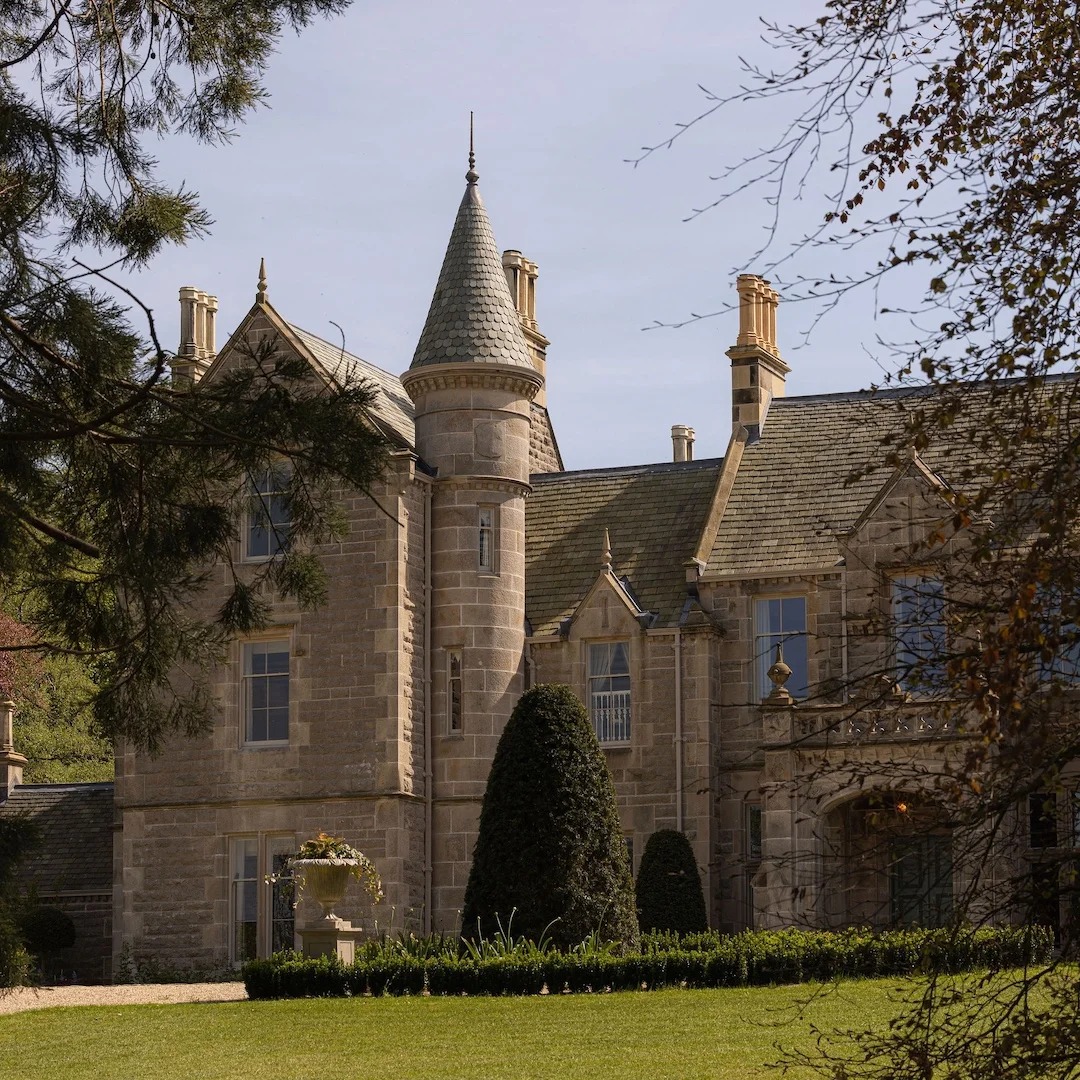
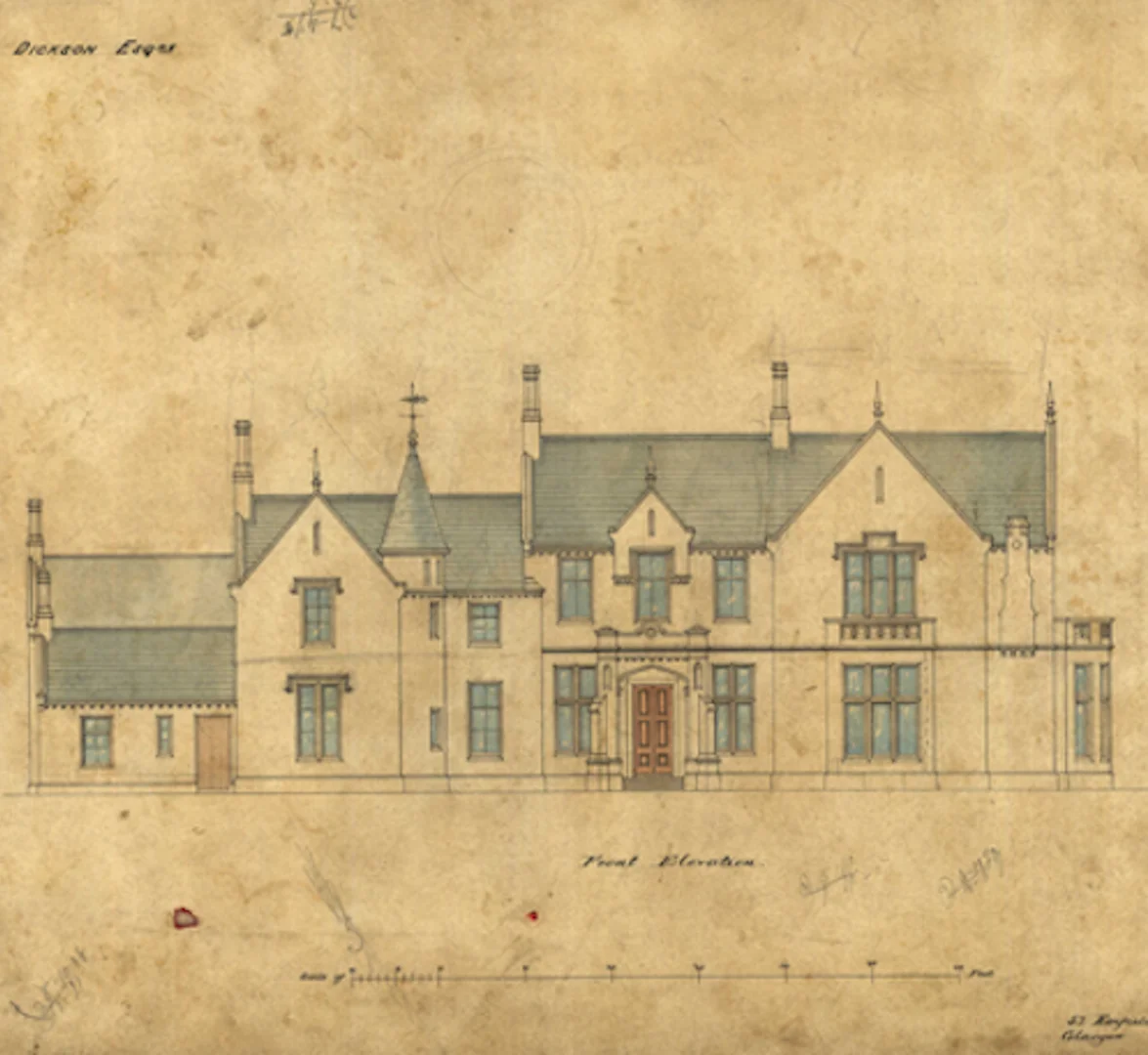
Gilford Castle was commissioned in the 1850s by Benjamin Dickson, a prosperous linen merchant whose family helped shape Gilford village’s industrial fortunes. Seeking a residence that reflected his success and standing, he engaged William Spence of Glasgow, an architect known for his romantic interpretations of the Scottish Baronial style.
Spence’s design combined rugged stone walls, turrets, and oriel windows with refined interiors rich in carved oak and stained glass. Built to overlook the River Bann, the house embodied mid-Victorian confidence — a blend of industry, artistry, and aspiration.
In 2019, Gilford Castle entered a new chapter. Under the Moffett’s care, every cornice, panel, and pane of glass was revived, restoring splendour to William Spence’s 19th-century design.
1
Entrance Hall
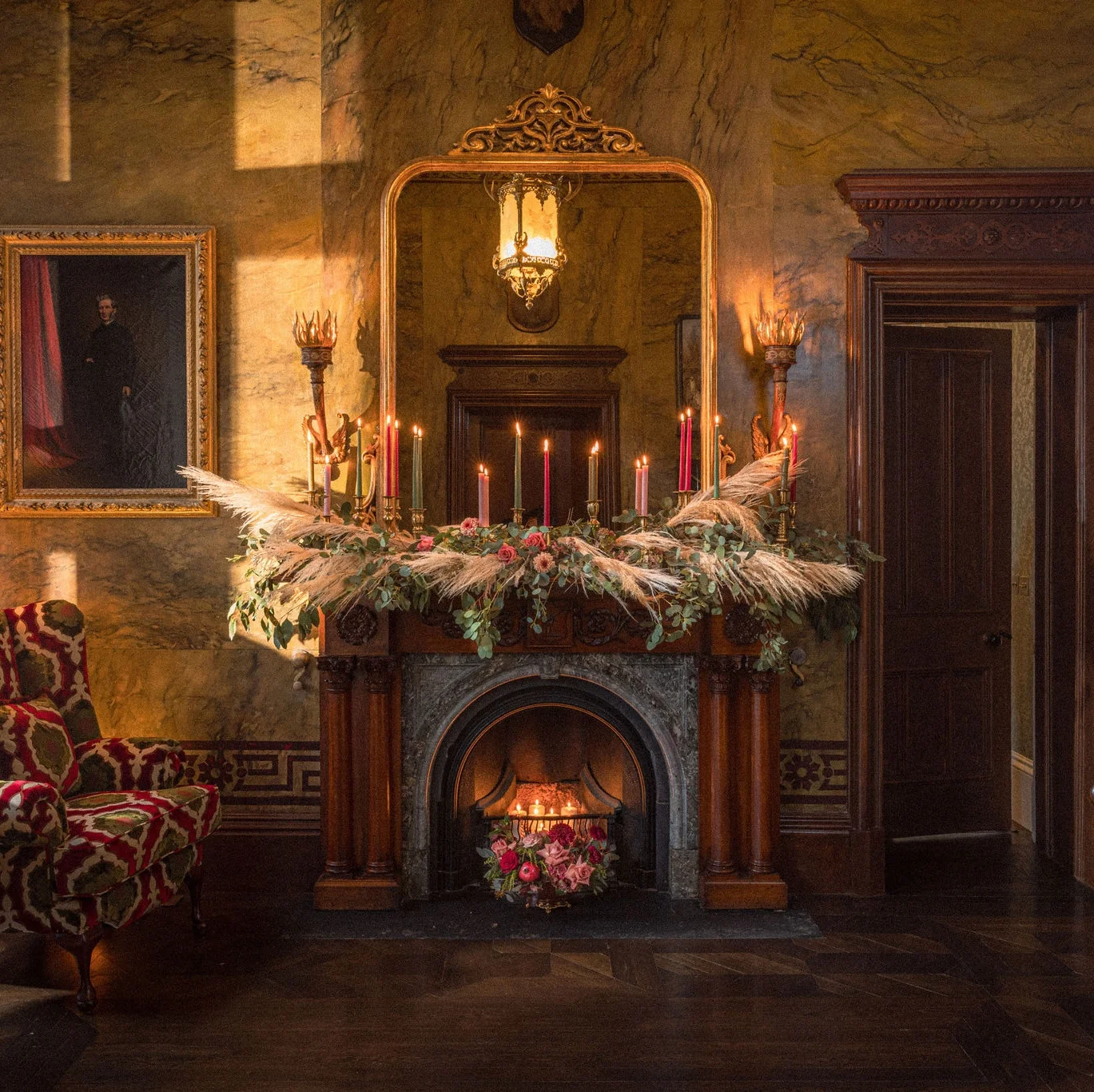
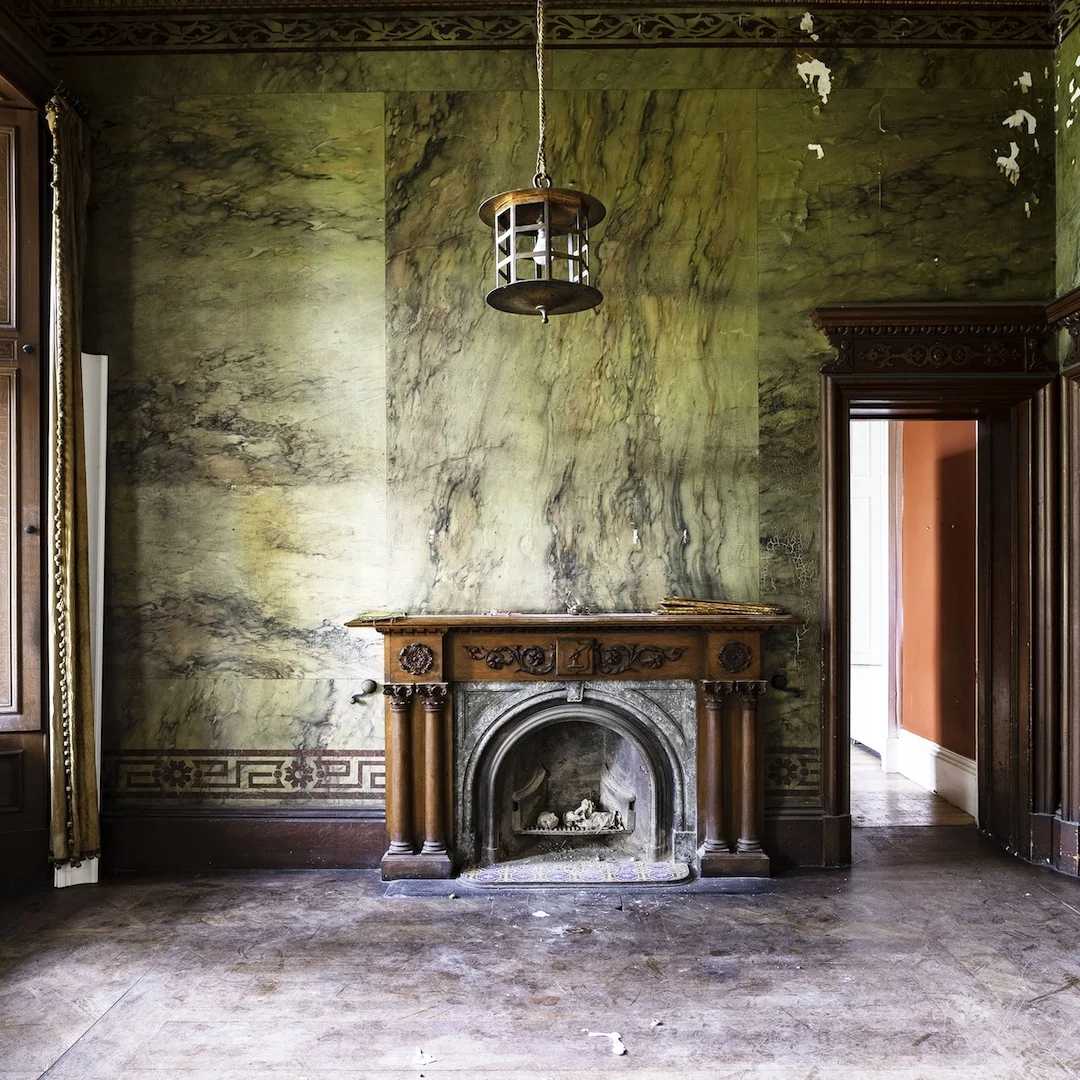
The Moffetts found Gilford Castle’s entrance hallway faded and timeworn, but restored it with the same attention to detail that characterised its original craftsmanship. They conserved the decorative plaster and oak detailing, revived the faux marble walls’ original tone, and reintroduced warmth through carefully chosen furnishings and lighting. Today, the space greets guests with the same rich welcome it afforded visitors more than a century ago.
2
Drawing Room
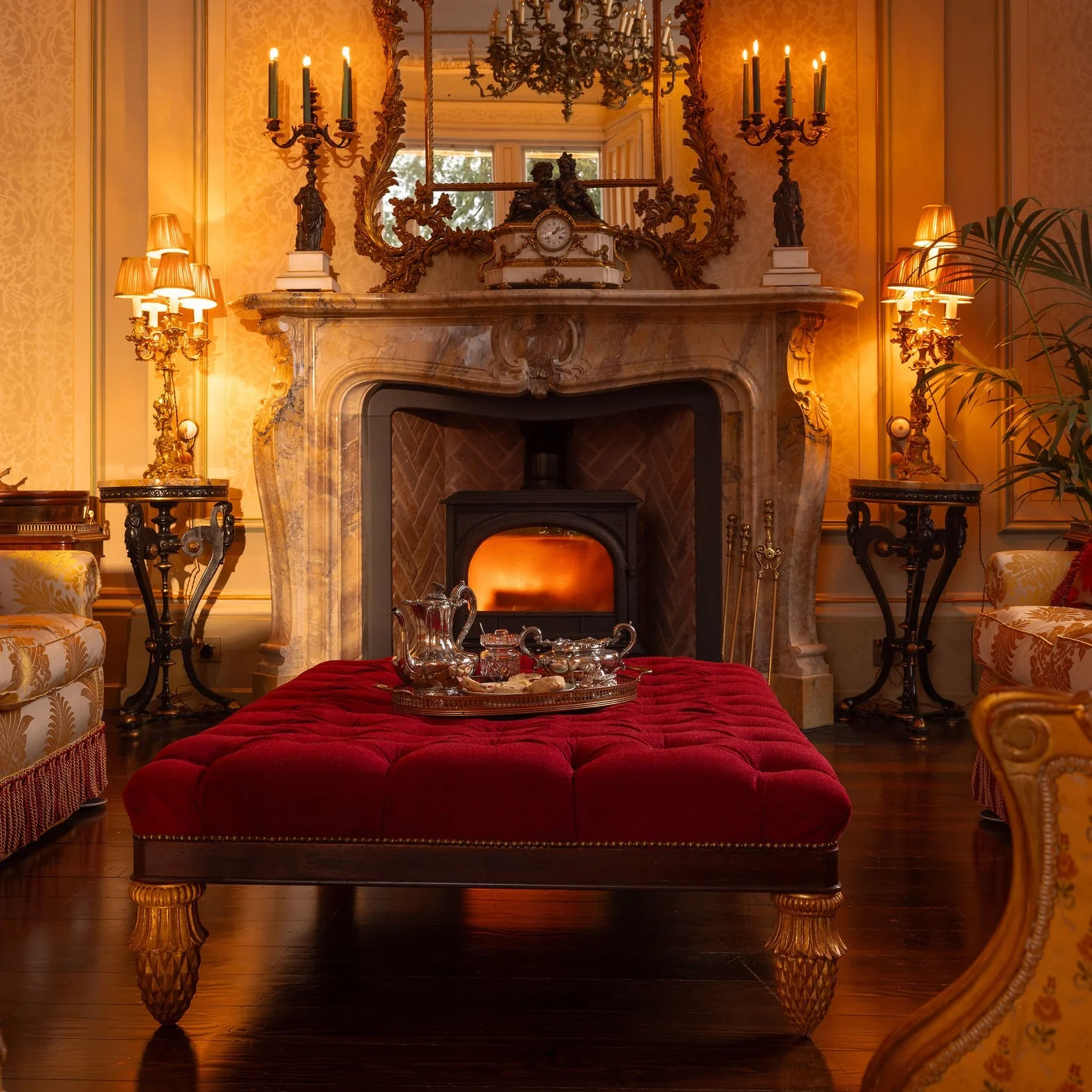
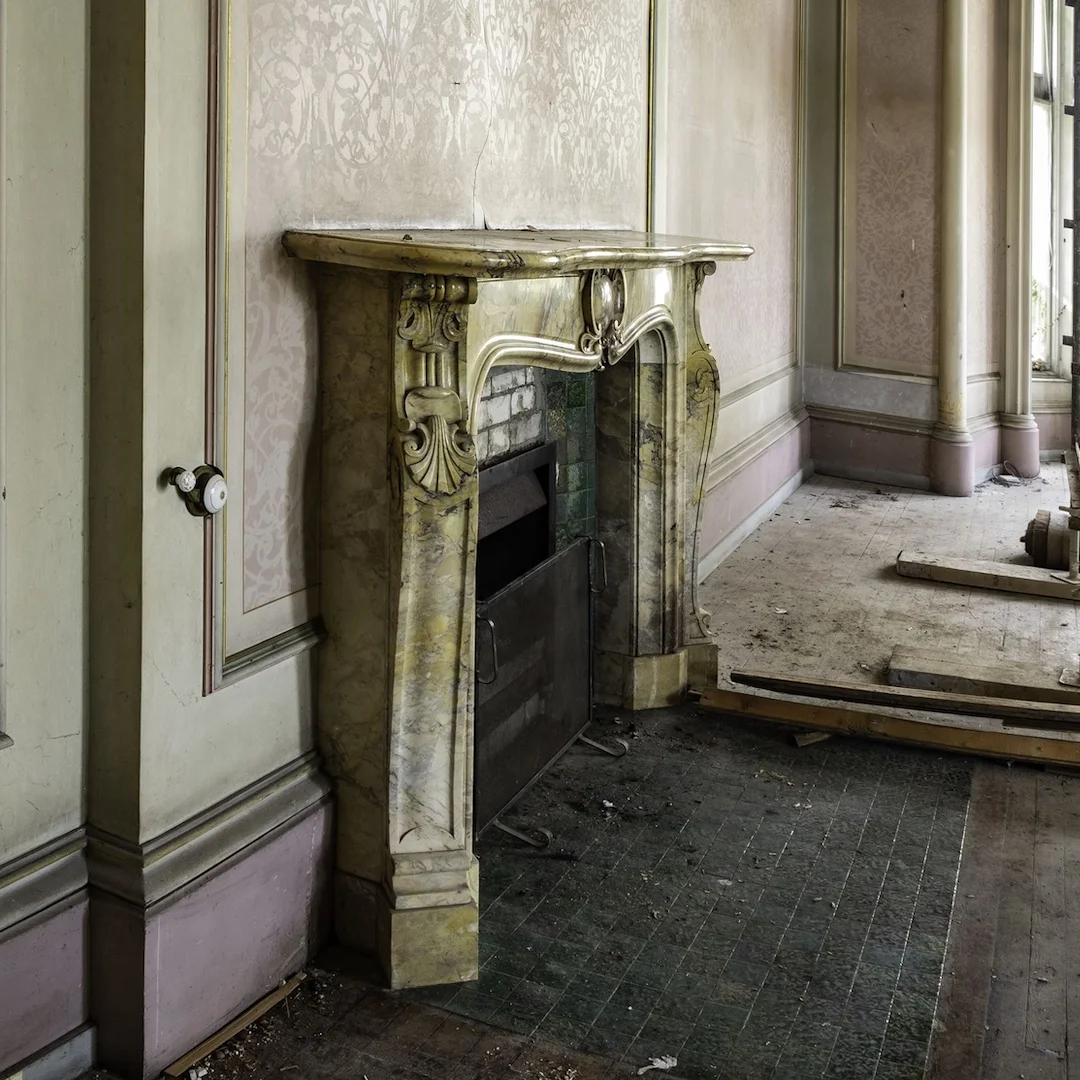
The Moffetts found the drawing room muted by age, but meticulously restored its original grandeur. They revived its ornate plasterwork and marble fireplace, reinstated period-appropriate wall coverings, and curated furnishings that echo the house’s Victorian refinement. The result is a room of warmth and composure, where every detail enhances the artistry of its 19th-century design.
3
Library
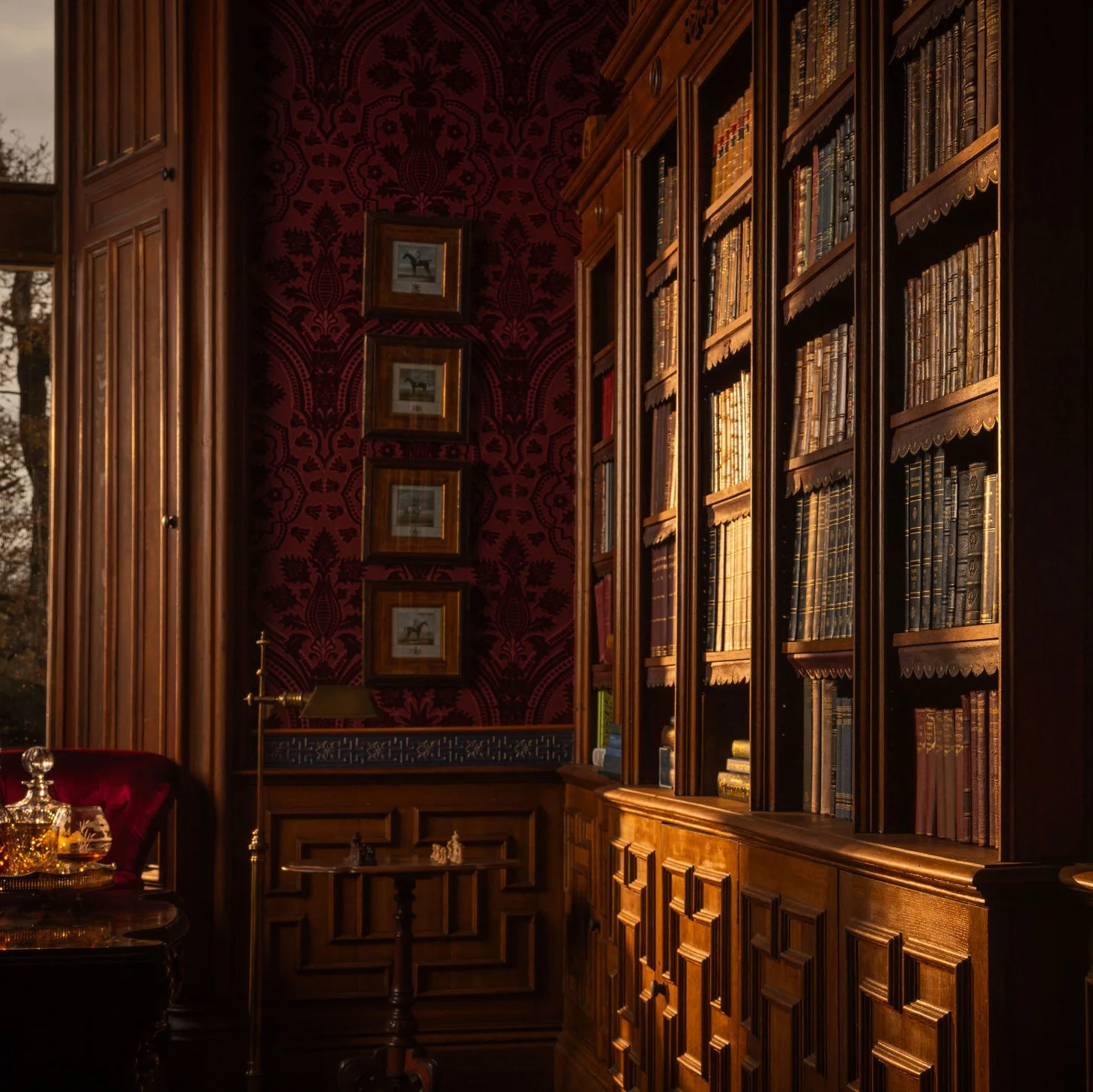
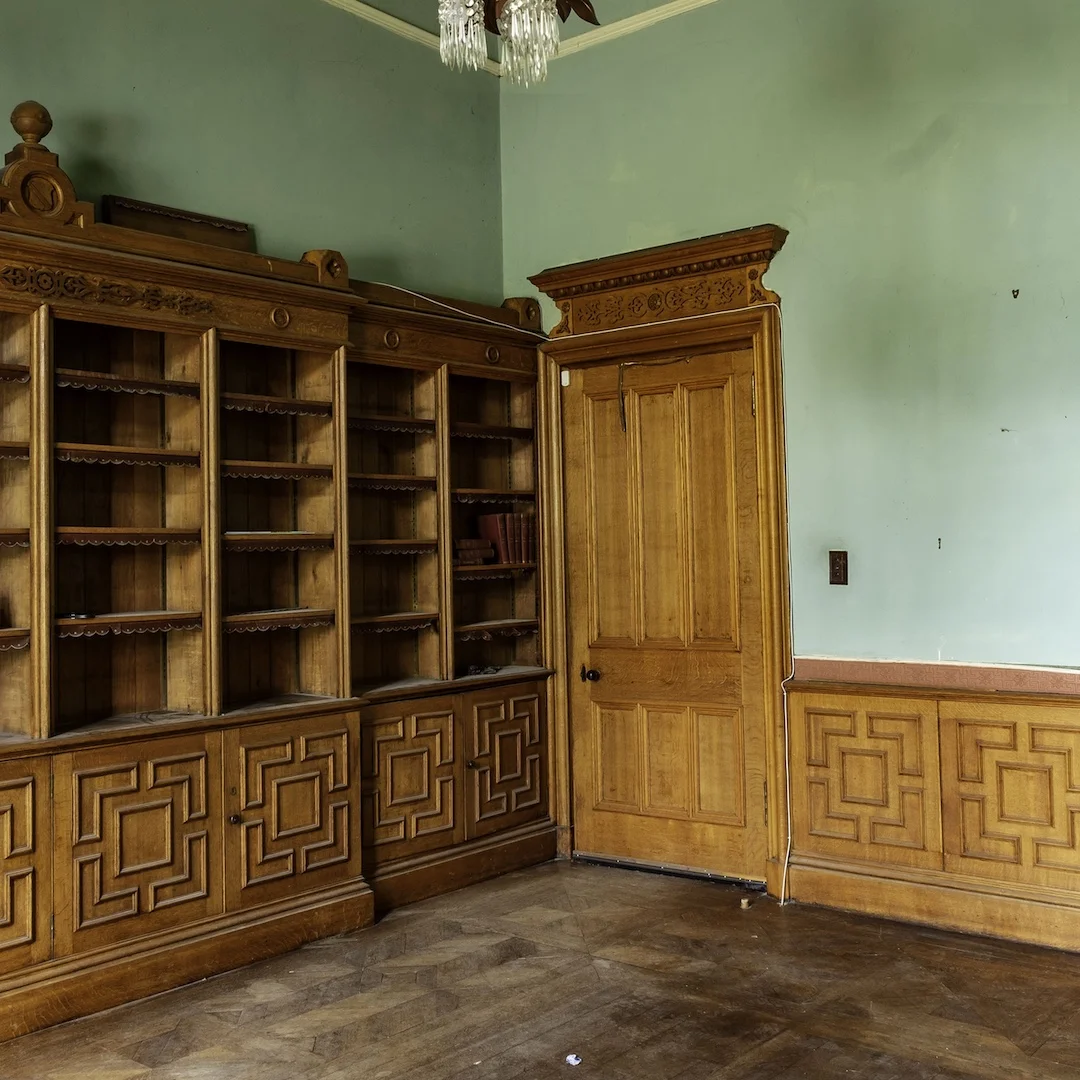
Gilford Castle’s cosy library overlooking the garden has been returned to its former warmth and depth. The Moffetts restored the original oak cabinetry and panelling, reinstated patterned wall coverings inspired by Victorian design, and introduced furnishings that bring texture and intimacy. Imagine sitting here on a rainy afternoon, the fire glowing, flipping through the pages of a good book.
4
Main Stairwell
The Moffetts have sensitively restored the main stairwell, conserving its original oak balustrade and stained glass while renewing the plasterwork and joinery with care. The space now glows with daylight filtering through the great windows, the warm light of the chandelier above, and the soft illumination of wall sconces on either side.
Look closely and you’ll see that the leaded glass bears the initials of Katherine Carleton, one of Gilford Castle’s most colourful former inhabitants.
5
Gentleman’s Lounge
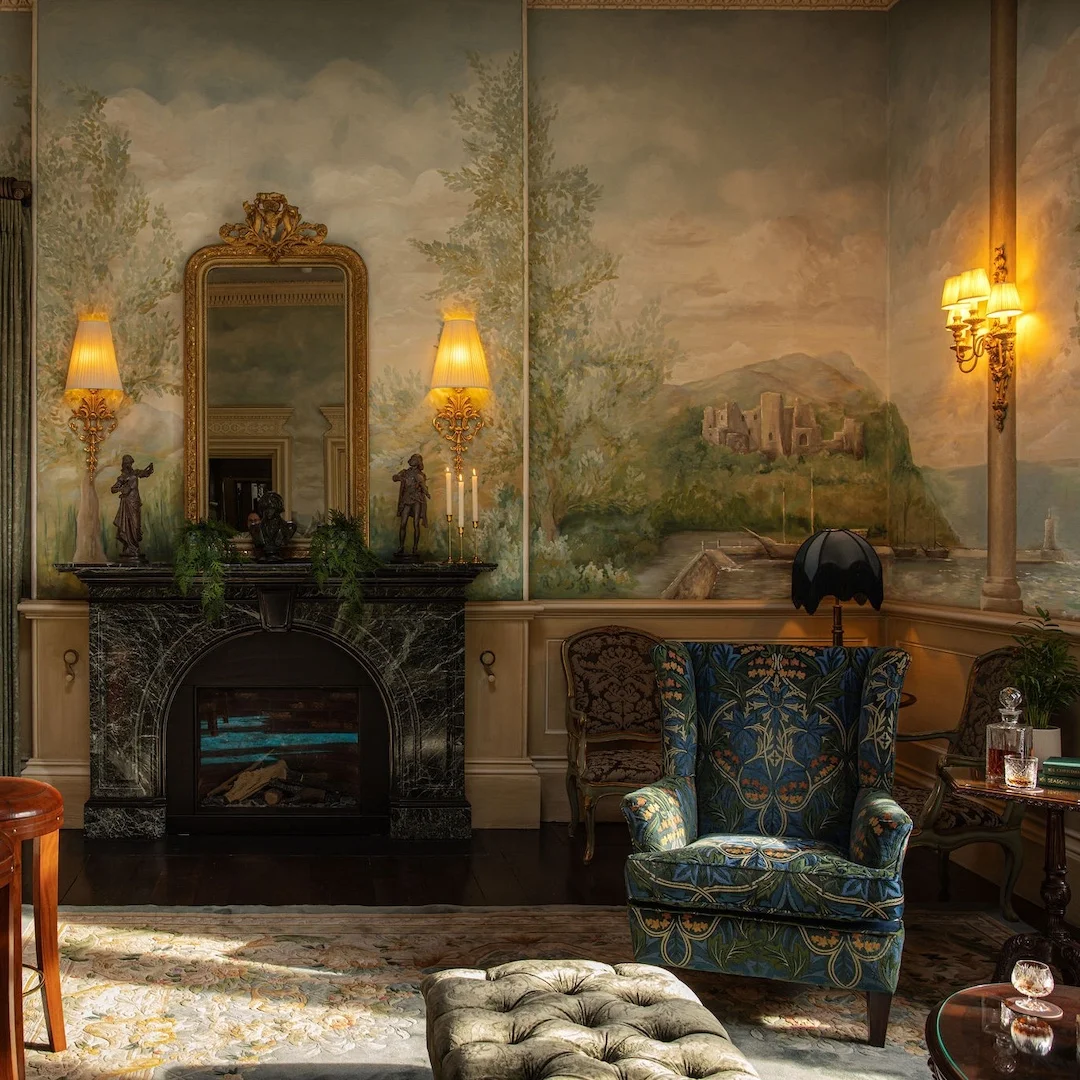
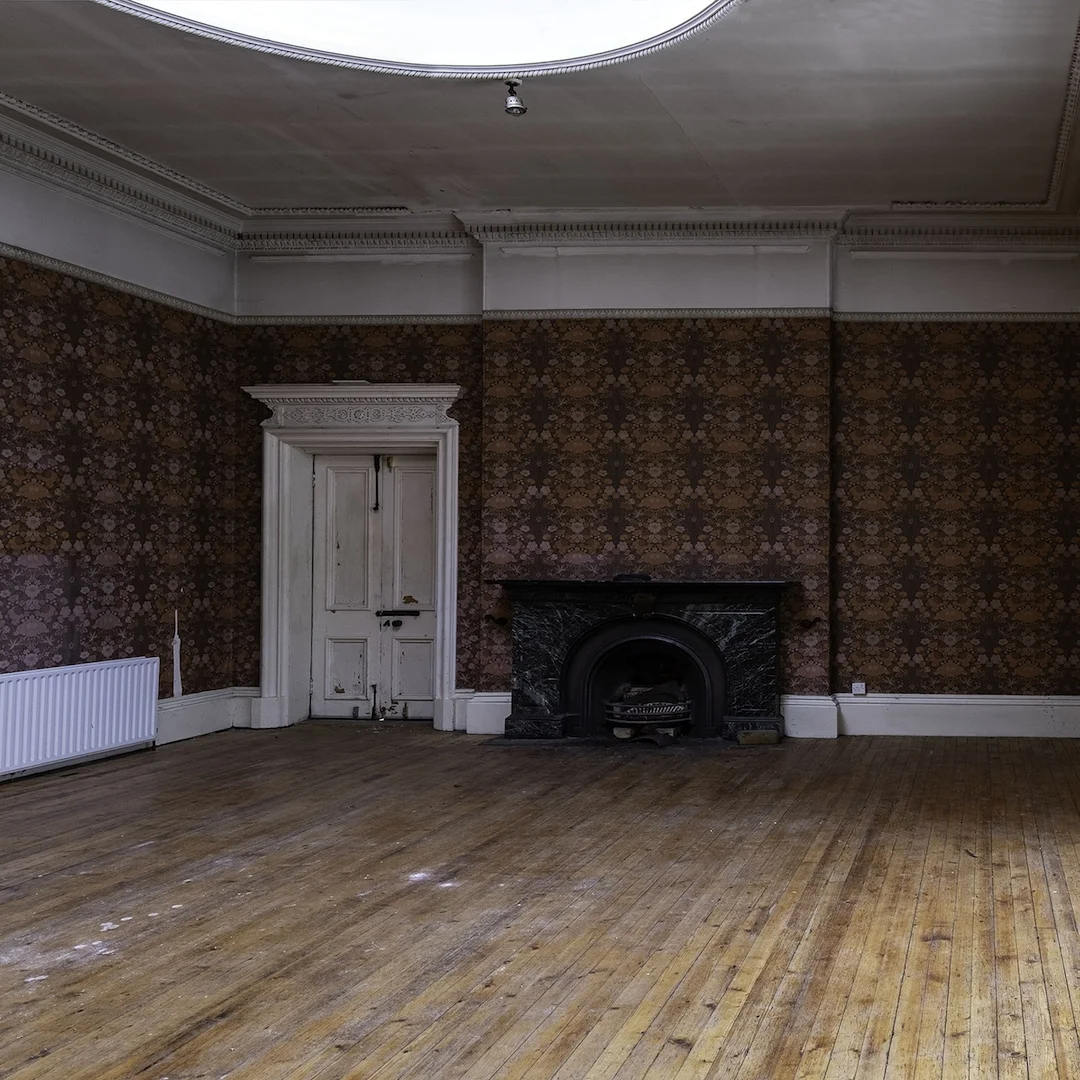
Once stripped of its original character, the Gentleman’s Lounge has been completely reimagined yet continues to honour its Victorian proportions and features. The Moffetts restored the marble fireplace and intricate plasterwork, then introduced rich fabrics, period lighting, and bespoke furnishings to create an inviting space that balances refinement with comfort.
The walls feature hand-painted murals depicting Ulster’s historic castles, including Narrow Water near Warrenpoint and Dunluce on the north coast. Can you identify the others?

Contact
Embark on your journey
Staying at Gilford Castle Estate is a unique, exclusive experience. Reach out through our contact form and request a bespoke consultation so we can understand your requirements and provide you with a tailored experience.

